
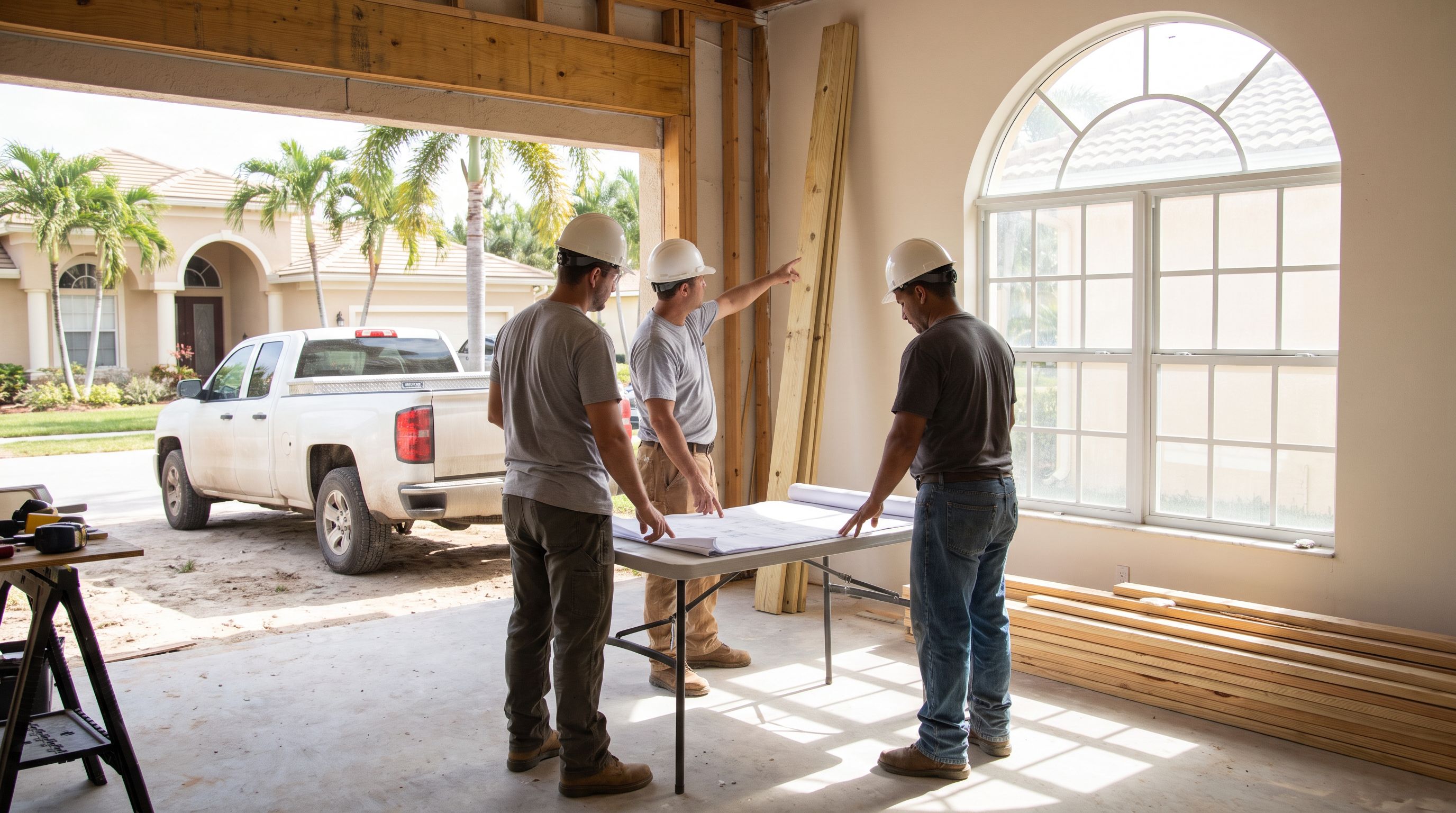
Before you sign a remodeling contract in Broward County, three checks do most of the work: confirm the contractor's license is current and active on the state's DBPR website, get insurance certificates sent to you directly by their agent, and settle in writing who pulls the permit and handles the lien paperwork. Everything else, from references to change-order rules, builds on those three. Below is the order to run them in, and what a clear answer should sound like.
- Search the license yourself at myfloridalicense.com and match the license holder's name to the person running your job.
- Ask the insurance agent, not the contractor, to send you the general liability and workers' compensation certificates.
- In most of Broward the permit comes from your city's building department, and the licensed contractor should be the permit applicant.
- Never agree to pull an owner-builder permit for work someone else is doing.
- Tie payments to visible milestones and collect lien releases before the final check.
1. Confirm the license is active, in the right category, and in your contractor's name
Florida licenses contractors at the state level through the Department of Business and Professional Regulation, and the search is free at myfloridalicense.com. Look up both the company name and the name of the person who will actually run your project, then check three things: that the status reads current and active, that the category covers your scope, and that the license is held by someone involved in your job. Building, general and residential contractor licenses cover structural remodels, additions and garage conversions, while specialty licenses are narrower. Ask who the qualifier is and match that name to what the state site shows you.
2. Get insurance certificates from the agent, not as a forwarded PDF
You want two coverages confirmed: general liability for damage to your home, and workers' compensation for anyone injured on your property. Ask the contractor to have their agent email you a certificate of insurance listing you as the certificate holder, which also tells you the policy is current rather than expired last spring. If subcontractors will be on site, ask how their coverage is verified; Florida's Division of Workers' Compensation has a public proof-of-coverage lookup. Without workers' comp in place, an injury in your bathroom can end up aimed at your homeowners policy.
3. Ask which building department issues your permit, and who applies for it
In most of Broward County the permit comes from your city's building department rather than the county, so the right question is simply "which office are we applying to, and when?" The licensed contractor should be the applicant of record. Decline any request to pull an owner-builder permit for work you are paying a company to perform, because it shifts code responsibility and liability onto you and strips away much of your recourse. Ask which inspections your job requires and at what stage each one lands.
4. Check your own house for unpermitted past work
Most Broward cities let you search permit history by address online. A bathroom or kitchen that a previous owner redid without a permit, or that never received a final inspection, can surface the moment you apply for yours and can complicate a future sale. Raise it during the estimate so the scope, schedule and cost account for closing out old records. A contractor who works in this county regularly will not be rattled by the question.
5. Read the scope line by line, with allowances in writing
Vague proposals cause most remodeling disputes, so the contract should name specifics: tile size and layout, vanity or cabinet specs, countertop material, fixture and faucet models, lighting, ventilation, and who supplies each item. Where you have not chosen yet, insist on a written dollar allowance per category so an upgrade becomes a known number instead of an argument. Confirm how change orders are priced and that they are signed before work proceeds. If your project touches exterior windows or doors, ask how product approvals are handled, since Broward sits in Florida's High Velocity Hurricane Zone.
6. Pin down the payment schedule and the lien paperwork
Payments should follow milestones you can actually see: permit issued, demolition and rough-in inspected, tile set, punch list closed. Florida limits how long a contractor can sit on a large deposit before moving the job forward, so ask them to walk you through their deposit and permit timeline in plain terms. Expect a recorded Notice of Commencement on most remodels, and expect Notices to Owner to arrive from suppliers and subcontractors; those letters are routine, not a warning. Before releasing final payment, collect lien releases from everyone who sent you a notice, plus the contractor's final affidavit.
7. Call references who had your job, in a house like yours
Ask for two or three recent local projects that resemble yours in size and type. Then ask the owners the useful questions: what changed mid-project and how it was priced, whether crews arrived on the days promised, how dust and water were controlled in a single-bathroom home, and whether the final invoice matched the contract. If you can see one finished job in person, look at grout lines, caulk joints, and whether cabinet doors and drawers line up.
Florida's Homeowners' Construction Recovery Fund exists to help homeowners harmed by a licensed contractor's misconduct. Hire outside that system and you also step outside that remedy, no matter how good the price looked. Treat cash-only pricing, no written contract, pressure to sign today, or a license number that does not match the name on your paperwork as reasons to keep interviewing.
When to call a pro instead
Verifying licenses and permit history is homeowner work, and you can do all of it in an afternoon. The project itself is different: anything that moves plumbing, alters electrical, removes or opens a wall, or adds living space needs a licensed contractor as the permit holder, not a handyman working off the books. The same goes for a job someone else started and left half finished, where an unpermitted rough-in has to be opened up, documented and inspected before new work can proceed.
Talk to a licensed local contractor
A Class Remodeling Fort Lauderdale is a licensed and insured bathroom and kitchen remodeling contractor serving Fort Lauderdale and nearby neighborhoods, and we are happy to answer every question on this checklist before you commit to anything. We handle bathroom remodeling in Fort Lauderdale, kitchen remodeling in Fort Lauderdale, and broader home remodeling in Fort Lauderdale including additions and garage conversions. Call (754) 457-2737 or send your project details through our contact form for a free quote.
Frequently Asked Questions
How do I verify a remodeling contractor's license in Broward County?
Search the contractor at myfloridalicense.com, the Florida Department of Business and Professional Regulation site. Confirm the status reads current and active, that the license category covers your scope of work, and that the license holder is actually involved in running your project rather than a name being borrowed for permits.
Who should pull the permit for my Fort Lauderdale remodel?
The licensed contractor doing the work should be the permit applicant, and in most of Broward County the permit is issued by your city's building department rather than the county. Avoid pulling an owner-builder permit for work you are paying a company to perform, since it transfers code responsibility and liability to you.
I received a Notice to Owner letter. Is something wrong?
No, that is normal on a permitted remodel. Suppliers and subcontractors send Notices to Owner to preserve their lien rights. Keep every notice you receive, and before you release final payment ask for a lien release from each party who sent one, along with the contractor's final affidavit.
How should payments be structured on a remodeling contract?
Tie each payment to a milestone you can verify, such as permit issued, rough-in inspected, tile set, and punch list completed, rather than to dates on a calendar. Ask the contractor to explain their deposit and permit timeline, and make sure change orders are priced and signed before that work begins.
Does a remodeling contractor in Florida need workers' compensation coverage?
Ask for proof of both general liability and workers' compensation, and have the insurance agent send the certificate directly so you know it is current. If subcontractors will be on site, ask how their coverage is confirmed; Florida's Division of Workers' Compensation offers a public proof-of-coverage lookup.